
Las Vegas Blackjack - PT Gaming Las Vegas Blackjack Guide
Las Vegas Blackjack is the streamed live dealer table where every hand is one clear decision - hit, stand, double or split - played against a dealer under classic Sin City rules. Short answer: it is the most decision-rich seat on PT Gaming, the honest way in is a few demo observations of the Las Vegas Blackjack Demo stream plus a basic-strategy chart beside you, and PT Gaming Las Vegas Blackjack rewards flat stakes and calm hands far more than hot streaks.
Live tables beside Las Vegas Blackjack
Same streamed wing, different pacing - compare tables before you commit an evening budget.




Can you learn Las Vegas Blackjack without losing money first?
Direct answer: yes. The Las Vegas Blackjack Demo stream shows the same dealer, shoe and decision clock as the real table at zero cost, and basic strategy - the single most valuable page a new player can memorize - is free everywhere. You only need pesos when two things are already true: you can recite the chart's core lines without thinking, and your session budget is written down somewhere other than your memory.
On PT Gaming the table loads portrait-first, so watch a full shoe on your phone before your first bet. Decision timing on a live table is real: the dealer prompts, the clock runs, and players who learned inside the Las Vegas Blackjack Demo make their hit-or-stand call in one tap while first-timers scramble. The PT Gaming app download route puts the same table behind a home-screen icon, but the browser door opens the identical shoe - pick one and keep records in one place.
What kind of game is Las Vegas Blackjack on PT Gaming?
Short answer: Las Vegas Blackjack is a decision-first live card game. Unlike baccarat, where you back a side and watch, or slots, where you stake and spin, blackjack asks you to act on every card you receive - and the house edge responds to how well you act. That is why this table carries the lowest, most transparent margin of the PT Gaming live wing for players who follow the chart, and one of the highest for players who wing it.
The Las Vegas framing matters too: standard rules, dealer stands on the regulated total, blackjack pays at the posted ratio, and the shoe reshuffles on schedule rather than memory. Everything that changes your odds is printed on the table's rules panel before the first hand - reading it once is the cheapest improvement available on the whole live wing.
Las Vegas Blackjack mechanics, broken into four moving parts
Short answer: stakes, chart, shoe and bankroll - four mechanics decide everything, and only the first one involves money at the start.
The stake layer
Table minimums and chip steps are fixed per seat. Flat betting - the same chip every hand - is the baseline any chart assumes; raising stakes mid-shoe invalidates the math you are leaning on.
The decision layer
Hit, stand, double and split each have a mathematically correct answer for every dealer up-card. The chart prints them; your job under the decision clock is execution, not invention.
The shoe layer
Cards reshuffle on a posted schedule. Between shuffles the composition drifts, but counting beyond "the shoe feels rich" is a discipline most casual sessions should skip entirely.
The bankroll layer
Split your session into 30-40 hand-sized units. Insurance looks protective and is not - skip it by default the way you would skip a side bet with a smiling dealer.
Beginner notes for a first Las Vegas Blackjack shoe
Short answer: the five mistakes below cost new players more than any unlucky shoe - and every one of them is removable before the first hand.
One: skipping the chart. Guessing turns a low-edge game into a high-edge one instantly. Two: playing tired. Live tables run around the clock precisely because decisions soften at midnight. Three: chasing a lost hand with a doubled stake; the shoe has no memory and owes nobody. Four: treating side bets as seasoning - most carry triple the main game's edge. Five: ignoring session length; a live dealer will deal forever, so the exit must come from you. New players who borrow the pacing habits from quieter cabinets - the calm pick-and-resist loop described on the Irich Bingo quick-card page, for example - usually settle into Las Vegas Blackjack faster than slot-only arrivals.
If the decision clock feels heavy at first, alternate between watching hands and playing them, and remember that the reels-somebody-else cabinet described on the Sweet Bonanza slot page makes a deliberately slower companion session. For pure reflex downtime between shoes, the Iron Dome casual game notes cover a defense-style round that asks nothing from your bankroll math.
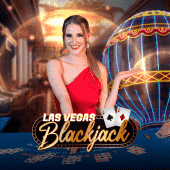
The Las Vegas Blackjack table from the official icon down
Short answer: the icon sets the scene - a felt table under Vegas lights - and the live stream keeps the same promise: readable cards, visible shoe, and chip values printed where your thumb lands.
On a phone in portrait, your hand occupies the lower third with the four decision buttons stacked in thumb reach; the dealer's up-card and the posted table rules sit at the top; and the bet chip tray docks beside the decision buttons so stake sizing never leaves the frame. Watch the demo stream first for two reasons: to confirm your connection holds the video steady, and to time yourself against the decision clock without a peso attached to a slow tap.
The most common Las Vegas Blackjack scenario, answered directly
"I know the chart, but I froze at the decision clock and misplayed a hand - how do I fix that?" Directly: you fix it in the Las Vegas Blackjack Demo stream, not at a real seat. Freeze happens when execution is theoretical; the demo gives you the identical dealer prompts and countdown with zero cost, so run twenty hands there and the tap pattern becomes automatic before real chips are in play.
Two supporting notes for that same scenario. First, drop the stake for your first three real shoes after a freeze - execution pressure falls when the chips are small. Second, if freezes keep happening late at night, the problem is the schedule, not the skill; the demo will be there tomorrow and so will the table.